


VisiVite®
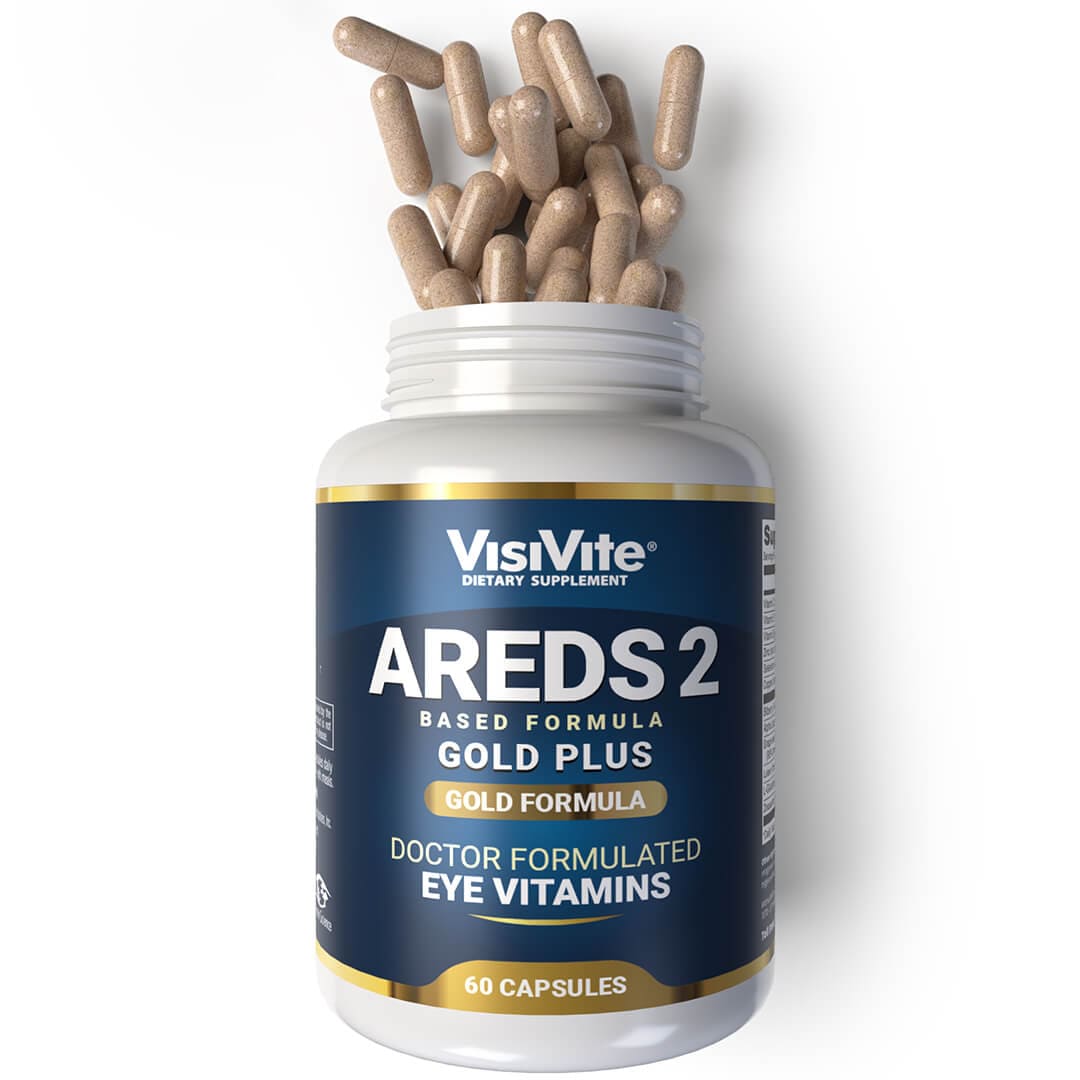
AREDS 2 PLUS+ Gold Eye Vitamin
VisiVite's Doctor-Formulated AREDS 2 supplement is based on the popular AREDS 2 study conducted by the National Eye Institute's AREDS 2 research for nutritional support of macular degeneration.
Unique AREDS 2 Formula
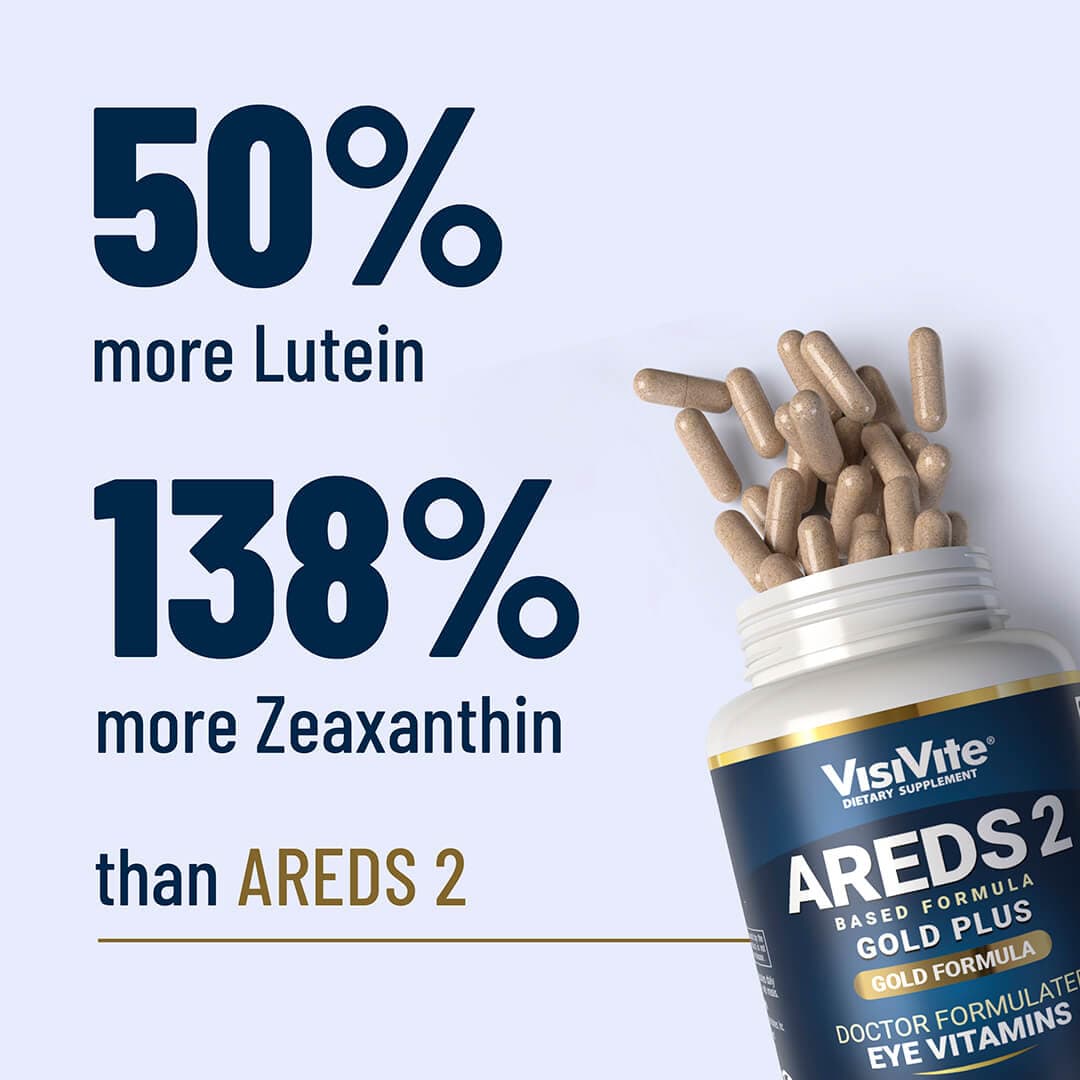
- 50% more Lutein than AREDS 2
- 138% more Zeaxanthin than AREDS 2
- 200 mcg Selenium to offset Vitamin E effects on prostate health
- Gentle Zinc (40 mg) and Copper (1 mg)[Read why...]
Our Best Selling AREDS2
- Doctor-Formulated, based on 20 years of proven research
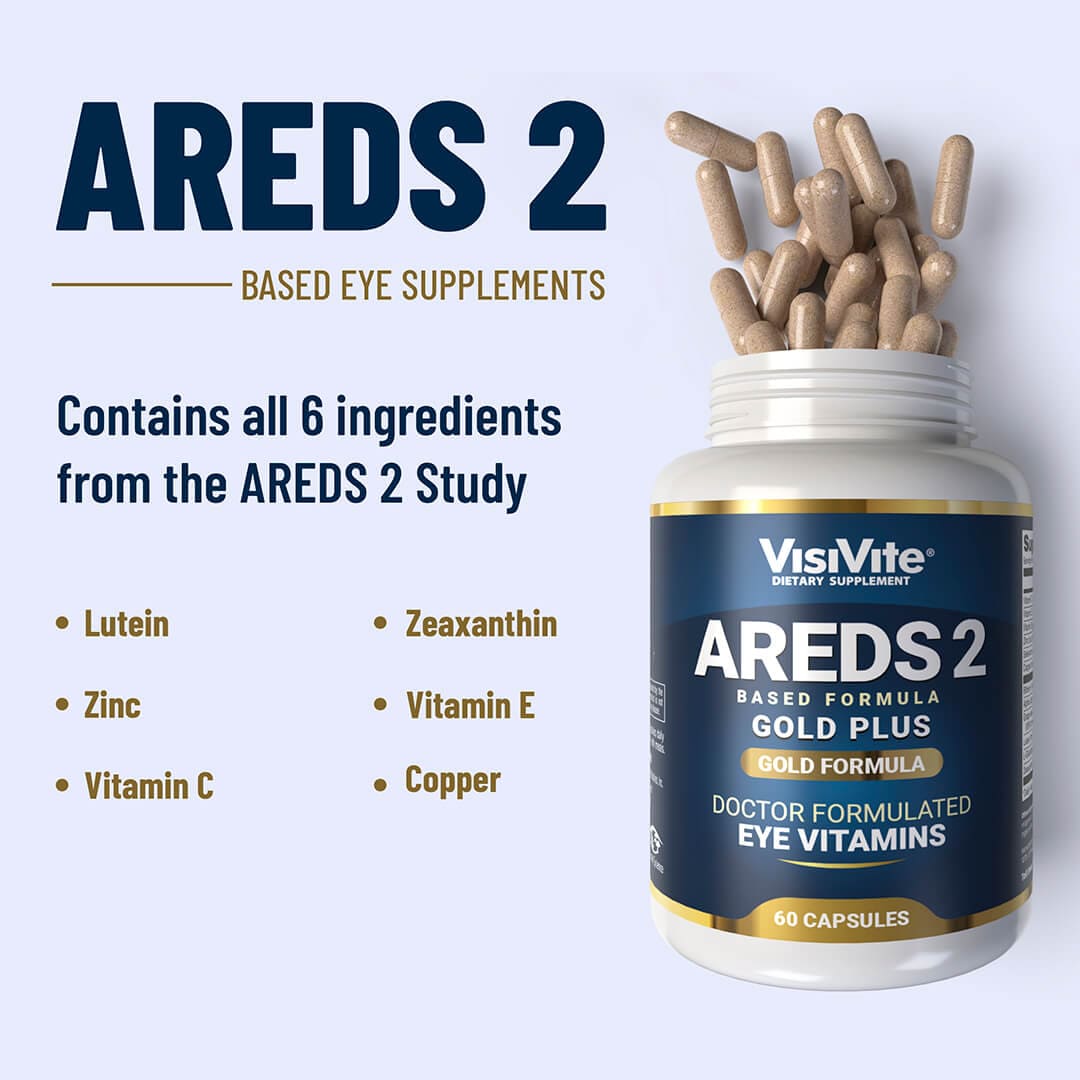
- Contains the ingredients from the AREDS 2 study
- Includes Bilberry and Grape Seed Extract
Premium Ingredients:
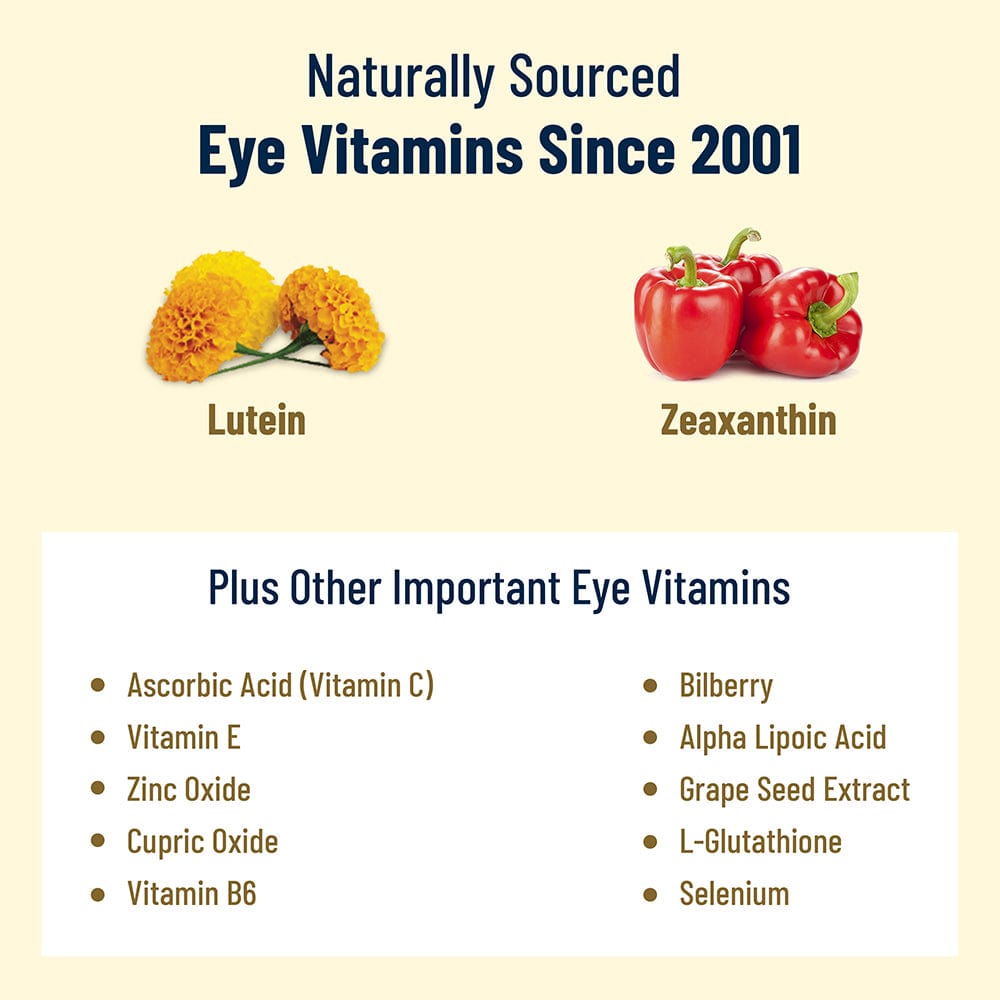
- Naturally-sourced Lutein (marigolds) and Zeaxanthin (paprika)
- Vcaps Plus premium vegetarian capsules
- Natural Vitamin E from plant oils (d-alpha tocopherol)
None of the Bad Stuff:
- No artificial ingredients or colors
- No synthetic meso-zeaxanthin
- No beta carotene
Directions: Take two veggie caps at once or one veg cap twice daily with food.
50% More Lutein
The gold standard - features 50% more FloraGlo Lutein than other AREDS2 formulas.
138% More Zeaxanthin
Our custom-formulated blend includes more premium OmniXan Zeaxanthin.

Naturally Sourced
Made from premium, natural ingredients, packaged in vegan-friendly veggie capsules.
Doctor-Formulated Vitamins
Developed by world-renowned Ophthalmologist based on 20+ years of research.

Learn why everyone is switching to VisiVite AREDS 2 Vitamins
Our Doctor-formulated macular degeneration vitamins are created with all of the top quality ingredients included in the AREDS2 study, without the junk fillers that you don't need.
Those who value getting top quality, naturally sourced ingredients in their AREDS2 Vitamin are making the switch to VisiVite.
The Gold Standard in AREDS2 Vitamins
- Based off of the original AREDS 2 study
- Contains 6 additional Eye Vitamins
- Naturally Sourced, Doctor Recommended
- 100% Hassle-free Refunds

The VisiVite Advantage
Scientifically Based
The ingredients chosen are backed by strong research and scientific evidence.
Precisely Calibrated
The ingredients are chosen for bioavailability, clean sourcing and nutritional support of ocular structures.
Satisfied Customers
VisiVite's thousands of users for many years is evidence of high customer satisfaction in its high quality, naturally-sourced ocular nutritional products.
About VisiVite Eye Vitamins

VisiVite was founded by Dr. Paul Krawitz, a world-famous eye doctor who originated multiple trademarks and patents for innovative eye supplements. Dr. Krawitz spent over 20 years carefully researching and creating the original formulas for the 18 eye vitamin products listed below that have been the foundation for excellence in vision support.
Today, VisiVite continues the strong pedigree it was built on by selecting premium, refined, natural ingredients for nutritional potency and easy absorption for maximum eye and body cellular health, while avoiding common synthetic fillers and artificial colors.
The original formulas for the following products were specially developed by Dr. Krawitz:
- VisiVite AREDS2 Plus+ Gold
- VisiVite AREDS2 Select Formula
- VisiVite AREDS2 - Zinc Free White Formula
- VisiVite AREDS2 E-Free Blue Formula
- VisiVite AREDS2 Sugar-free Chewable Tablets
- VisiVite Lutein+ Plus Formula
- VisiVite Super Lutein 444 Formula
- VisiVite Balanced Ocular Support
- VisiVite NightSight Formula
- VisiVite Blue Light Basher
- VisiVite Dry Eye Relief TG-1000
- VisiVite Quench
- VisiVite Co-Defense Multivitamins
- Reziva Resveratrol
- Provision Professional AREDS2 Macular Health Formula
- Dr. Krawitz Macular Support
- Dr. Krawitz Vision Performance
- Dr. Krawitz Dry Eye Support
More on Dr. Krawitz
Doctor Krawitz is the original founder of Visivite Eye Vitamins and served as President and C.E.O. of Vitamin Science, Inc. from 2001-2022.
Dr. Krawitz is a Magna Cum Laude graduate of The University of Michigan, and received his medical degree in 1985 and has been a member of the prestigious Alpha Omega Alpha Medical Honor Society.
Dr. Krawitz trained in Internal Medicine at Columbia-Presbyterian Hospital, New York. He completed his Ophthalmology training at Mount Sinai Medical Center, New York, and later was selected as Chief Resident of that program.
He completed an additional year of specialized fellowship training in Glaucoma at Mount Sinai under the direction of Steven Podos, a recognized world leader in that field.
Dr. Krawitz has served in academia as an Assistant Clinical Professor of Ophthalmology in Manhattan. He has also frequently lectured at professional ophthalmic meetings regarding his highly successful surgical techniques for cataracts, glaucoma and specialty intraocular lenses.
While he was in his position as President and C.E.O. of Vitamin Science, Inc., Dr. Krawitz originated several patents and trademarks for nutritional supplements that support eye health.
Since 1993, he has become one of Long Island's most highly sought and professionally recognized eye surgeons, most notably while as a physician partner of OCLI - performing over 1000 ophthalmic procedures annually. These procedures include no-stitch cataract surgery, the most modern therapies for glaucoma, laser refractive surgery, and laser treatment of both macular degeneration and diabetic retinopathy.
Additional affiliations have included serving as a Diplomate of The American Board of Ophthalmology, Fellow of The American Academy of Ophthalmology, and being a member of the Long Island Ophthalmologic Society, The Suffolk Academy of Medicine, and the American Medical Association.
Other AREDS 2 Formulas
- Reviews
- Questions
- macular degeneration
- eyes
- VISIVITE
- vitamins
- formula
- Eye doctor
- difference
- results
- AREDS
- problems
 United States
Helped my eyesight
My eyesight actually got slightly better after I started taking this vitamin.
United StatesExcellent service
I have been on this for 10 years and it is always on time.
United StatesMOST EXCELLENT !!!
I continue to have good eyesight and I'm really happy for that.
United States United StatesBeen using for years
Been taking the vitamins for several years and still have fairly good results