
HOW DO SUPPLEMENTS HELP WITH GLARE?

Glare occurs when the amount of light entering the eye is greater than the eye's ability to manage the light.
There are three different types of glare:
-
Discomfort glare: This type of glare occurs when the eye is exposed to sudden fluctuations of light brightness. For example, when driving on a sunny day there will be direct bright light Inside the eye, rod and cone cells struggle to adapt to the shifting light conditions.
-
Veiling glare: Veiling glare is commonly associated with cataracts, in which the eye's lens becomes cloudy. Veiling glare is also caused when there is simply too much bright light for the eye to handle; for example, when facing high-beam headlights of oncoming traffic while driving. Veiling/disability glare significantly impairs visual performance.
- Dazzling glare: Some individuals are extremely sensitive to light, a condition known as photophobia. Anything that leads to retinal damage may increase sensitivity to light and dazzling glare. Dazzling glare can be overwhelming, and often causes temporary blindness.
Glare tends to be worse with older age, light colored eyes, prior eye surgery, and certain eye conditions, including cataracts, dry eye and macular degeneration.
Managing Glare and Halo Symptoms
Consulting with an eye health professional is recommended when glare and haloes interfere with vision and quality of life. A professional eye exam is especially important to rule out the possibility of cataracts, which are strongly associated with glare and halo symptoms. Early detection of cataracts improves treatment outlook. Eye health professionals may also recommend the following self-care practices to assist with glare and halo problems:
-
Wide-brimmed hat or visor: Protecting the eyes with a wide-brimmed hat or visor helps to block short-wave visible wavelengths from reaching the eye.
-
Sunglasses: Short-wavelength light creates the most glare, so sunglasses with a yellow, orange or red tint may be most effective at reducing glare.
-
Surgery: Surgery that replaces clouded lenses dramatically improves glare and halo issues while enhancing overall light tolerance.
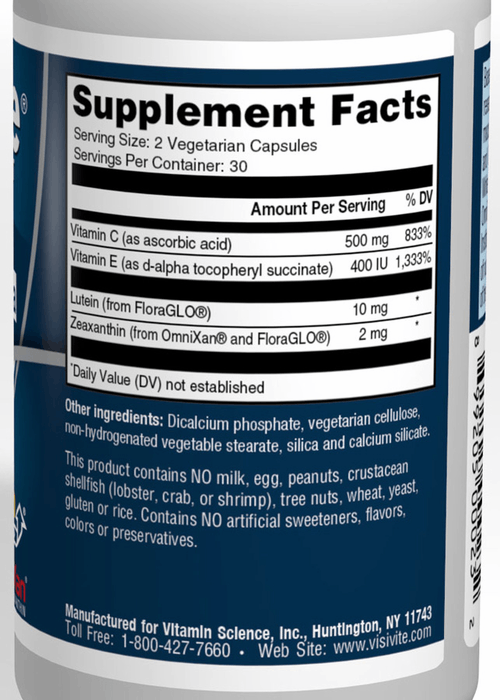
- Nutritional supplements: Science has identified several natural compounds that appear to support eye health when there are glare and halo symptoms. These compounds have been shown to filter damaging short-wavelength visible blue light from reaching delicate photoreceptors; accelerate glare recovery; promote lens clarity; support retinal health; replenish macular pigment; and manage dry eye symptoms that can worsen visual glare.
Professional athletes commonly take nutritional supplements to mitigate the effects of glare on their performance. Three popular VisiVite products that support glare and halo symptoms are listed.
-
VisiVite Balanced Ocular Support: For eyes over 40, loaded with natural lutein, zeaxanthin and astaxanthin, multiple additional antioxidants and performance ingredients for highest quality vision and ocular protection.
-
VisiVite NightSight®: For eyes age 18-40, pure ocular performance. Lutein and Zeaxanthin for improved contrast sensitivity, C3G for dark adaptation, and Saffron for retinal transmission speed.
- VisiVite Blue Light Basher®: VisiVite Blue Light Basher provides lutein, zeaxanthin, and 7 additional rich-colored plant pigments that are known to replenish the macular pigment layer of the retina and manage high energy blue light.