
While you may be saving a few pennies on your supplement that contains a cheaper form of Vitamin E, you are losing half the benefit of this important antioxidant.
Not all vitamin E is the same. Many cheap supplement manufacturers cut corners by using synthetic vitamin E -- a more affordable form (dl-alpha-tocopheryl) that "does less" than natural vitamin E.
Check the label of your AREDS 2 vitamin - Is it "DL" Synthetic or "D" Natural?
- 400 IU of Synthetic Vitamin E only contains 180 mg of "active" Vitamin E
- 400 IU of Natural Vitamin E contains 270 mg of "active" Vitamin E
- Did you know?
Synthetic vitamin E is made from petrochemicals, a.k.a. petroleum.
Natural Vitamin E vs. Synthetic Vitamin E
When you consume natural vitamin E -- either from food or from supplements -- you get the superior form that matches what nature intended. Natural vitamin E is recognized by the body and absorbed more fully than its synthetic counterpart.
Research has suggested that:
- Natural vitamin E is much more bioavailable than synthetic vitamin E
- Natural vitamin E may be more effective than synthetic vitamin E
- The body retains natural vitamin E in its tissues longer than it retains synthetic vitamin E
Vitamin E for Eye Health
Under the eyes category, vitamin E is a highly-regarded super-nutrient. High vitamin E intake is associated with a 20% reduction in risk of developing AMD. The Age-Related Eye Disease Study (AREDS) found that a mixed supplement of vitamin C, vitamin E, beta-carotene, zinc and copper reduced the risk of developing moderate-to-severe vision loss by 25%. Those with moderate to advanced AMD were found to reduce their risk of further vision loss by taking this antioxidant combination.
About Vitamin E Products
When buying a vitamin E supplement, check the label to see if it contains natural or synthetic vitamin E.
- Natural Vitamin E = d-alpha-tocopherol
- Synthetic Vitamin E = dl-alpha-tocopheryl
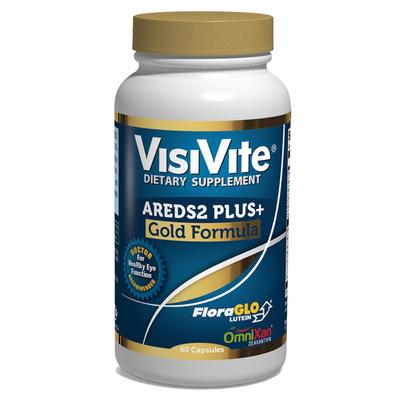 |
#1 Seller. 50% more Lutein and 138% more Zeaxanthin than the National Eye Institute's AREDS 2 formula. Like all VisiVite formulas, it is made using d-alpha tocopherol Natural Vitamin E.
|
 |
The doctor's choice for an AREDS2 Macular Degeneration supplement for their pickiest patients. Natural Vitamin E, Natural Lutein, Natural Zeaxanthin and vegetarian capsules. |
 |
VisiVite AREDS 2 Chewable Tablets
A unique, tasty, sugar-free AREDS 2 with Natural Vitamin E. No soy, gluten or GMO's. |